

MyPure Journal · Ingredients
29 June 2026
Whatever Happened to Rosehip Oil?
The forgotten face oil that deserves another look
When MyPure first launched in 2004, there was one skincare ingredient that seemed to be everywhere. Twenty years later, it quietly carries on doing exactly what it always did.

“Twenty years after its rise to fame, the science continues to support many of the reasons people fell in love with rosehip oil in the first place.”
So, Whatever Happened to Rosehip Oil?
The answer is simple: nothing happened to rosehip oil. The beauty industry became distracted by newer ingredients — but rosehip oil quietly carried on doing what it has always done. And looking at today’s research, the original hype was justified.
The Ingredient That Started It All
When MyPure first launched in 2004, rosehip oil was everywhere. Customers loved it. Beauty editors couldn’t stop talking about it. It quickly became one of our best-selling facial oils.
Then, almost overnight, it disappeared from the spotlight. Over the following two decades, argan oil, hyaluronic acid, niacinamide, bakuchiol, peptides and ceramides have each had their moment in the sun. Meanwhile, rosehip oil quietly carried on.
Rosehip Oil Never Stopped Working
Unlike some beauty trends that fade because they fail to deliver, rosehip oil simply lost the marketing battle. The skincare industry thrives on novelty — new ingredients generate headlines, while older favourites are often overlooked.
Researchers, however, never stopped studying it. In fact, much of the scientific evidence supporting rosehip oil’s use is stronger today than it was twenty years ago.
A Bottle of Rosehip Oil Contains Hundreds of Natural Chemicals
One of the biggest misconceptions in natural skincare is that plant oils are somehow “chemical free.” Nothing could be further from the truth. Rosehip oil is made entirely from chemicals — the difference is that they are naturally produced by the rose plant rather than manufactured in a laboratory.
Scientists have identified well over one hundred different chemical constituents in rosehip oil, with many more present in trace amounts. Together they create a remarkably complex ingredient. Rather than one “magic ingredient,” rosehip oil is a carefully balanced cocktail of hundreds of naturally occurring chemicals working together.
Key chemical groups in rosehip oil
| Chemical Group | Why They Matter |
|---|---|
| Essential fatty acids | Help support the skin barrier and reduce moisture loss |
| Saturated fatty acids | Help condition and soften the skin |
| Vitamin E compounds | Help protect the oil and provide antioxidant activity |
| Carotenoids | Natural antioxidants that also give the oil its golden orange colour |
| Plant sterols | Help support healthy-looking skin |
| Phenolic compounds | Help defend against oxidative stress |
| Volatile compounds | Contribute to the oil’s subtle aroma |
Why Modern Skincare Has Rediscovered Facial Oils
For years, facial oils developed an unfair reputation. People with oily or blemish-prone skin were often advised to avoid them completely. Today we know the story is more complicated.
Different oils contain very different mixtures of fatty acids. Rosehip oil is naturally rich in linoleic acid, making it lighter than many richer plant oils. Many people find it absorbs quickly and leaves skin feeling nourished rather than greasy.
Barrier Support Has Become Skincare’s Biggest Priority
Twenty years ago, many skincare routines focused on stripping oil from the skin. Today the emphasis has shifted towards protecting the skin barrier — and rosehip oil fits perfectly into this modern approach.
Its blend of essential fatty acids helps replenish some of the lipids naturally found within healthy skin, helping reduce water loss while improving softness and comfort.
More Than Just a Moisturiser
Because rosehip oil contains hundreds of naturally occurring compounds, researchers believe its benefits are unlikely to come from a single ingredient alone. Instead, several groups of chemicals appear to work together.
Current research suggests rosehip oil may help:
- Improve skin hydration
- Support the skin barrier
- Reduce moisture loss
- Protect against oxidative stress
- Improve the appearance of dull skin
- Support smoother, healthier-looking skin
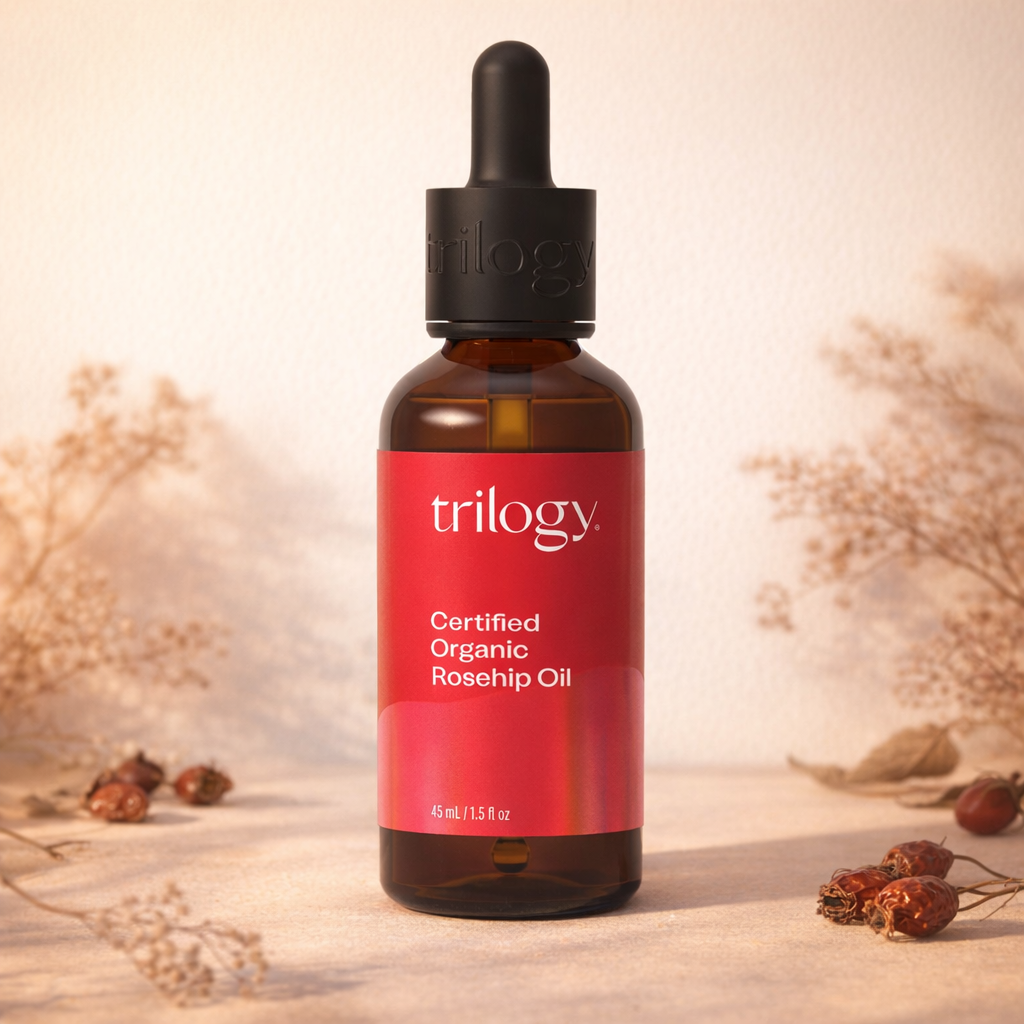
What About Scars?
Rosehip oil has long been recommended for improving the appearance of scars. Modern clinical studies suggest there is promising evidence that rosehip preparations may help improve the appearance of some scars and support normal wound healing, although more large clinical trials are still needed.
No cosmetic oil can completely remove a scar, but rosehip oil may help improve the appearance of scars over time when used consistently.
Rosehip Oil Isn’t One Chemical
Scientists have identified well over 100 naturally occurring chemicals within rosehip oil, including essential fatty acids, vitamin E compounds, carotenoids, plant sterols and antioxidants.
This is why the phrase “chemical free skincare” has no scientific meaning. Every natural ingredient — including rosehip oil — is made entirely of chemicals. What makes rosehip oil natural is that these chemicals are produced by the rose plant itself.
A Perfect Partner for Modern Skincare
Rosehip oil works well alongside many of today’s most popular skincare ingredients. While actives target specific skin concerns, rosehip oil helps support the skin barrier and improve comfort — particularly if skin feels dry or tight after using them.
It pairs particularly well with:
Who Is Rosehip Oil Suitable For?
Rosehip oil may be a good choice for:
- Dry or dehydrated skin
- Mature skin
- Dull complexions
- Skin exposed to harsh weather
- Skin that feels tight after using active ingredients
- Anyone looking for a simple, minimalist skincare routine
If you have oily or blemish-prone skin, introduce it gradually and see how your skin responds.
How to Use Rosehip Oil
After cleansing, apply two or three drops onto slightly damp skin. It can be used alone, after water-based serums, or before your moisturiser. In the morning, always finish your routine with sunscreen.
Key Takeaways
“Sometimes the best skincare ingredients aren’t the newest ones. They’re the ones that quietly stand the test of time.”
- Rosehip oil was one of natural skincare’s original hero ingredients
- Modern research supports its role in hydration and skin barrier function
- It naturally contains over 100 beneficial plant chemicals
- Its complex blend of fatty acids, antioxidants and plant sterols is thought to work together rather than relying on a single active
- Twenty years after its rise to fame, rosehip oil remains one of the most versatile and evidence-backed botanical facial oils available
Facial Oils at MyPure
View all →Our View at MyPure
Rosehip oil was one of the first ingredients we fell in love with when we launched in 2004 — and it has never left our range. That’s not nostalgia. It’s because the evidence continues to support it.
In a market that chases novelty, we think there’s real value in ingredients that have stood the test of time. Rosehip oil is one of them.
Sometimes the best ingredients aren’t the newest ones.
Shop Facial Oils at MyPure →